
In class this week, we practiced Asta Vakrasana (8-Angle Pose). Many students approached this posture for the first time. I find arm-balances to be an exhilarating addition to the physical practice. Aside from the liberation one feels when the feet and the seat lift off the earth, these postures help to improve our body-sensitivity, because they often involve multiple layers of action. In other words, much is happening both at and beneath the surface.
On one level, this posture takes a fair dose of concentration to assume (finding your way into the shape occurs over several steps). On another level, we move subtlety into the place of patience and surrender, as the body takes time to learn the way into the pose.
How to Prepare for Asta Vakrasana
Asta vakrasana requires a strong core, low back and adductors (inner thigh muscles that draw the legs together). I like to practice Chaturanga to Plank (start from the ground and work up), Handstand and Headstand (sirsasana i) as well as Navasana-hops (boat hops).


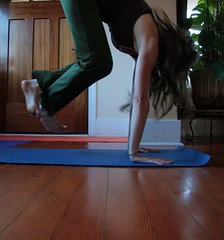
Additionally, openness through the hips is a must. Try Lizard, Twisting lizard, Twisted lizard mermaid before moving into Gomukhasana, Ardha Matsyendrasana, and rocking the baby.


How to Enter & Exit the Pose
A few videos. I made this little one shortly after teaching the class (i.e., I am wiped out!).
[youtube=http://www.youtube.com/watch?v=c6LzSvIYpRw]
I found this FABULOUS video by Christine Navarro on Youtube.
[youtube=http://www.youtube.com/watch?v=pnSm9DeF6kk]
Video still- prompts:

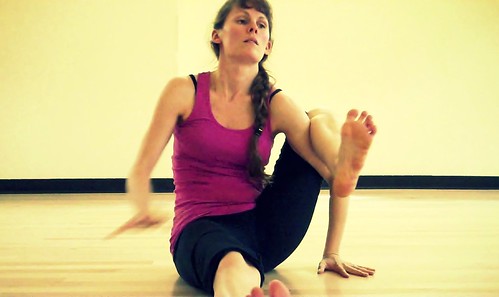

Written suggestions:
1. Sit on bum in dandasana;
2. Bring knee up over same-side shoulder;
3. Cross free ankle over top of lifted ankle;
4. Shift weight forward into hands as you
5. Squeeze your inner thighs together (this is the KEY to this posture);
6. Soften thighs;
7. Lower booty back down to earth.
Deepening your Experience in the Pose
Arm balances teach us much about subtlety, finesse if you will. These poses are not the product of brute strength alone and often require months of patience as we free tension from the hips to come into them. This is also an excellent place to practice Vairagya, or non-attachment. Let yourself be with whatever happens in your practice of the preparatory posture and the pose itself (if it is appropriate for your body to practice it). OPEN yourself to this experience. If you find yourself frustrated for not finding your way into a “perfectly” executed posture, notice those thoughts, bless them, and release them. The pose is not the goal…liberation is the goal, right?
After the pose
I like to ground my low back after practicing arm balances and find legs up the wall (viparita karani) particularly soothing. After coming back to earth, so to speak, practice forward folds like pascimottanasana. Take rest. Sit. OM.

Blessings. Kelly